

Rose Bridge Farm – Poole’d resources and expertise help farmers realise ambitions
At Rose Bridge Farm in Gorey, County Wexford, protecting land, water, and wildlife is not a policy—it is a way of life.
With the farm In the family since 1707, Alan and Cheryl see their turn in stewardship as a privilege and a responsibility. That responsibility now drives its transformation into a model of environmental stewardship—where sustainability is not an aspiration, but a standard—and where every decision is guided by a simple ambition: to improve the farm’s sustainability in each of the three pillars, environmental, economic and social.
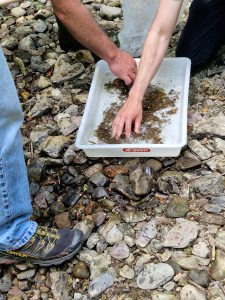
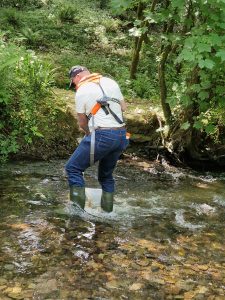
A kick sample taken on the day of the visit revealed that the water quality was high status.
Through the Farming for Water EIP, the Poole’s strengthened their commitment to safeguarding the River Bann which is a protected habitat and provides drinking water to the locality. With support from Tirlán and advisor Matthew Moylan, the couple—milking 72 cows—installed systems designed ensure water leaving the yards and roadway in the farm, and the public road, is contaminant free. Rainwater from the essentially clean yard and lane, and also from the public road, travels through Sediment tanks, swales, and ponds before it reaches the river, removing silt, and road dirt. These additional measures sit alongside a wider programme: multi-species swards, reduced nitrogen surplus, slurry testing, targeted training and soil testing.
The first step for the Farming for Water EIP involved creating a rainwater management plan co-developed by Matthew, Alan and Cheryl. This led to the suggestion of these additional measures. LAWPRO Executive Engineer Eamon O’Connell who specialises in Nature Based Solutions, helped to turn ambition into action.
For Alan and Cheryl, the motivation is clear.
“We wanted to make sure nothing from our farm entered the river,” she says. “Biodiversity and environmental awareness are part of who we are—and part of what we hand on.” With the slurry and dirty water already well looked after this treatment train adds an extra layer to keep the sediment from the locality from entering the river.
That philosophy shapes even the simplest decisions. Hedgerows, once cut annually, are now managed on a three-year cycle. The impact is immediate: stronger natural boundaries, less labour, and thriving habitats for birds, insects and pollinators.
“It cost us nothing to start,” Cheryl explains, “but the results have been huge.”
The dairy enterprise is the sole family income, the Pooles are keen to explain that the cows are the cornerstone of everything. We strive to maintain a healthy, productive, happy herd, this then gives us the opportunity to develop new habitats and conservation projects.
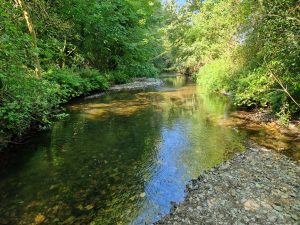
Above: This Section of the River Bann which runs through the Poole farm is described as having High water quality status (Q4-5). This improved in water quality in 2019, and measures are now in place to protect this improvement.
For Alan, sustainability is as much about resilience as it is about responsibility.
“We are always looking to see what else we can do, what can make a difference for the farm, and for nature,” he says.
That thinking has driven major changes. Infrastructure has been upgraded and slurry storage expanded beyond immediate need, creating a vital buffer that allows nutrients to be used at the right time. The result is a 30% reduction in chemical nitrogen use—cutting costs while improving efficiency.
“The extra capacity gives us control,” Alan explains. “We’re not forced to spread slurry—we can wait for the right conditions and get the full value from it.”
The transformation extends across the farm. Hedgerows have been planted, owl and swift boxes installed, and a sand martin wall added. Two ponds—very different in scale—have quickly become thriving ecosystems.
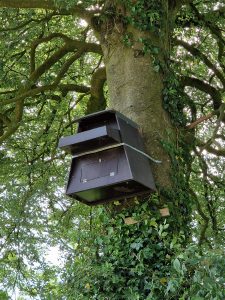
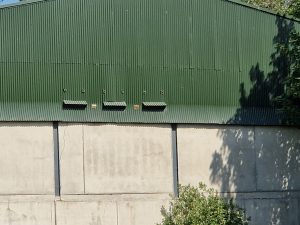
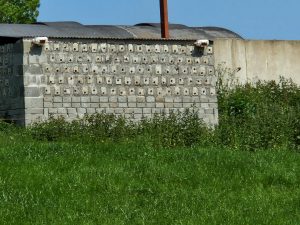
Above top : The owl box; above centre -the sand martin wall; and above the swift boxes.
The smaller pond, fed by a natural spring, captures runoff from a nearby roadway. Sediment is removed, while vegetation will trap any nutrients, before the water returns clean to the river. Monitoring shows the system is working.
The second pond forms the final part of a carefully engineered treatment train system. Rainfall run-off passes through two settlement tanks, into a swale, and finally into the pond, where nature completes the filtration process.
A swale is a shallow, gently sloped channel designed to slow, capture, and filter water as it moves across land. It typically follows the natural contour, allowing runoff to spread, soak into the soil, and deposit sediment. Swales reduce erosion, improve water quality, recharge groundwater, and support vegetation by holding moisture longer in the landscape for healthier, resilient ecosystems overall.
Eamon O’Connell describes the approach simply: slow the water, filter it, and let the land do the work. “From an engineering perspective, the results speak for themselves,” he says.
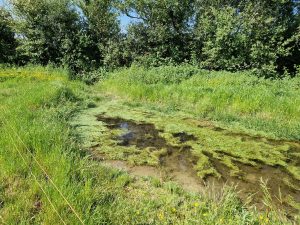
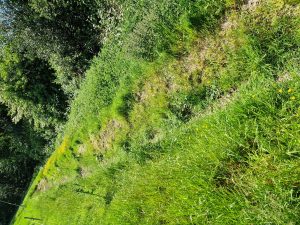
Above top: The pond and above: the swale which feeds the pond.
“Yes, we’ve taken a small area out of production,” Alan admits. “But what we’ve gained is far greater—better biodiversity, better water quality, and a farm that’s working with nature instead of against it.”
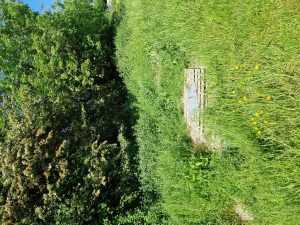
Above: One of the settlement tanks.
For other farmers considering similar steps, the Pooles’ message is direct: start with something attainable, the keep going.
“Some of the most effective changes are simple,” Cheryl says. “And once you see the results, it pushes you to do more.”
Advisor Matthew Moylan agrees. “These measures are unobtrusive, but their impact is significant. Heavy rainfall is no longer a risk here—the system captures and treats water before it ever reaches the river.”
For farmers like the Poole’s, the Farming for Water EIP has made the difference not in ambition—but in delivery.
“They have always been doing the right thing,” Matthew says. “Now they have the support in making it happen.”
At Rose Bridge Farm, sustainability is no longer a project. It is the way the farm works, the way decisions are made, and the way a 300-year-old holding ensures its future—cleaner, richer, and ready for the next generation.

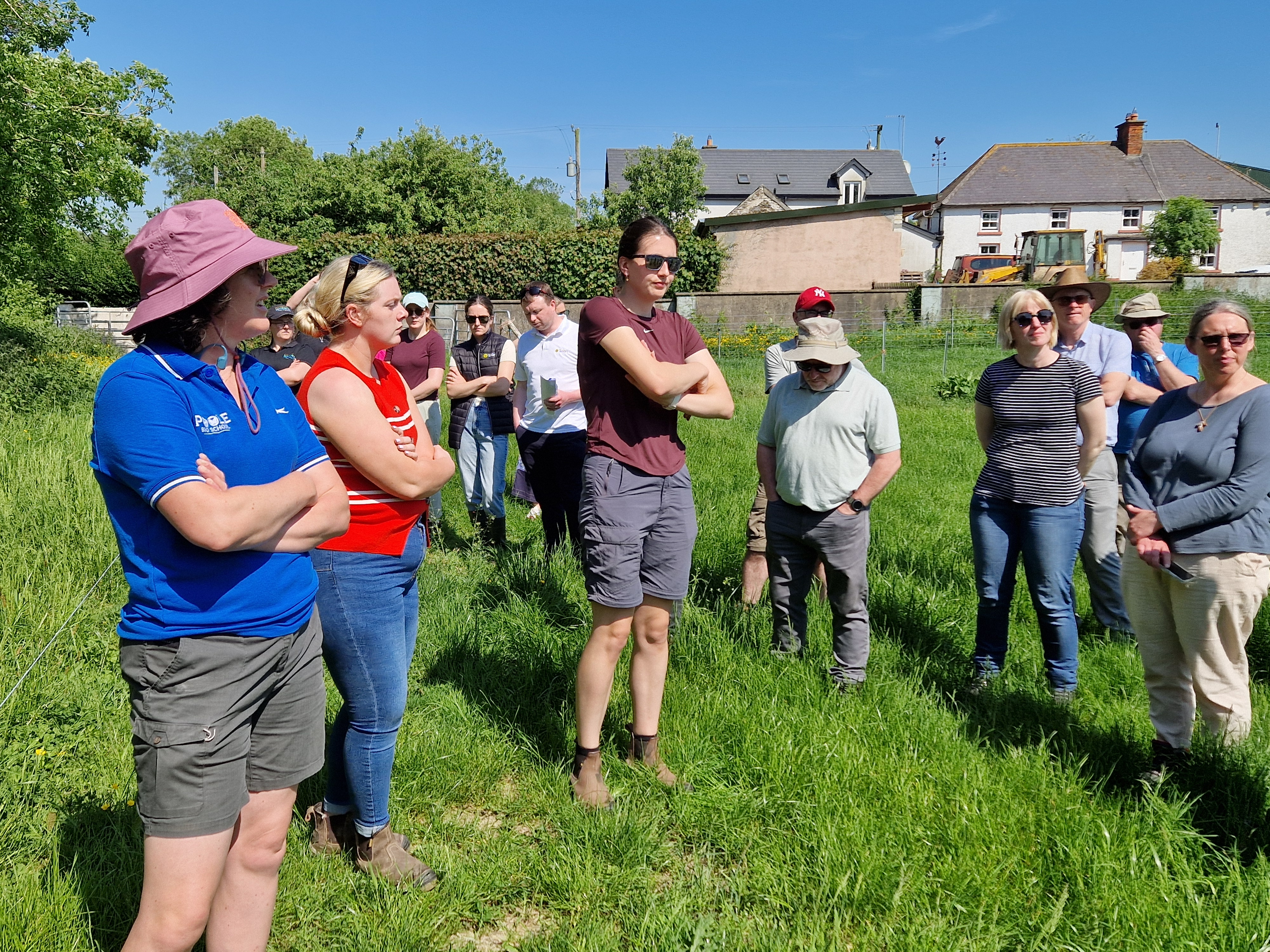
Members of the South-Eastern Regional Operation Committee attended the Poole farm to view the EIP measures installed. Cheryl Poole (extreme left) and her husband Alan (extreme right) explained how their farm works, their commitment to best environmental practice and how the Farming for Water EIP with the assistance of Tirlán, helped them to realise their ambition for the farm.